

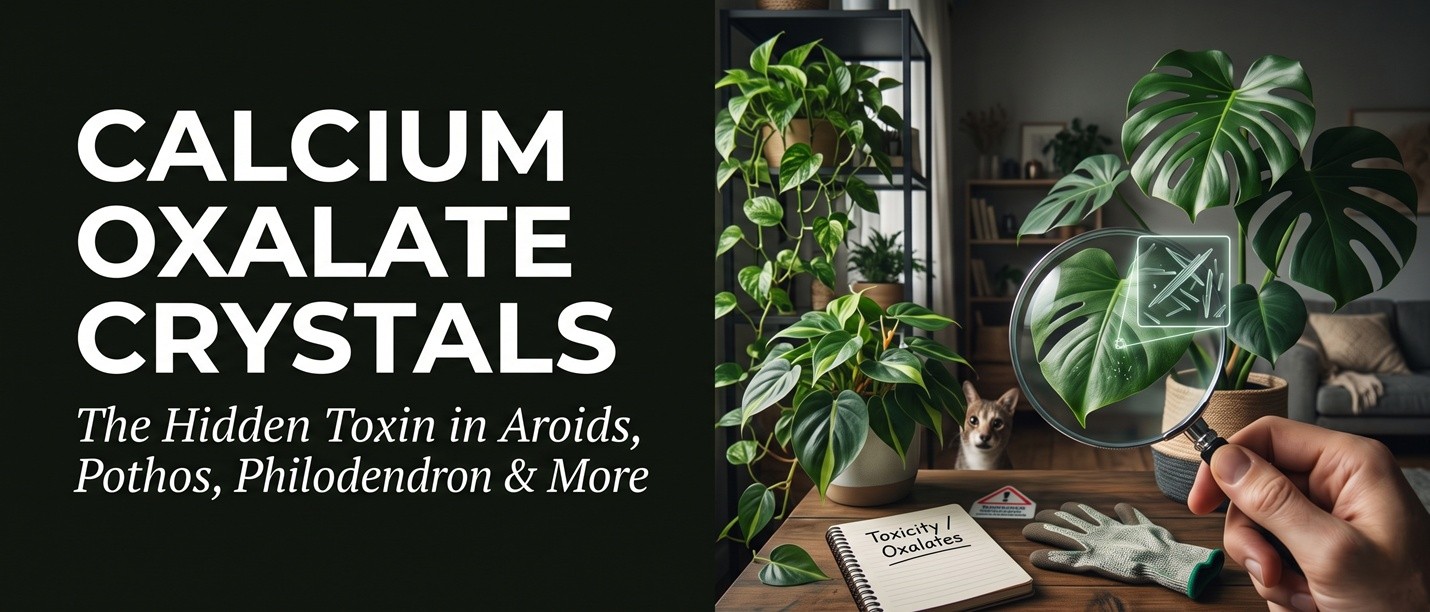
Why Aroids Burn Your Mouth
If you have ever chewed a piece of raw taro root or accidentally gotten Dieffenbachia sap on your tongue, you have felt calcium oxalate at work. The immediate sensation is a violent burning, swelling, and numbing that can last hours. Behind that sensation is a microscopic defense system: thousands of needle-shaped crystals called raphides, each one sharpened to a point thinner than a human hair, designed to inject a protease toxin into any tissue that damages the plant's cells.
Calcium oxalate is the single most common toxin in ornamental houseplants. It is found throughout the Araceae family — Monstera, Philodendron, Pothos, Peace Lily, ZZ Plant, Dieffenbachia, Aglaonema, Anthurium, Caladium, Calla Lily, Elephant Ear, and dozens of others. The crystals are not a metabolic byproduct but a deliberate evolutionary defense, manufactured in specialized cells called idioblasts and stored under pressure. When an animal bites the leaf, the cell wall ruptures and the raphides are ejected like microscopic darts.
💡 Tip
The burning sensation is immediate and intense, which is exactly what the plant wants. Most animals learn after one bite never to try that plant again. Pets and small children who don't know better are the most common victims.
Symptoms of Calcium Oxalate Poisoning
In pets (cats, dogs, and birds) and humans, the symptoms follow a predictable sequence. The first sign is intense oral irritation — pawing at the mouth, drooling, head shaking, and vocalizing in distress. The lips, tongue, and throat swell visibly within minutes. Vomiting is common as the stomach tries to expel the irritating plant material. In severe cases, the throat can swell enough to cause difficulty breathing, though this is rare with typical houseplant ingestions.
Symptoms usually peak within 30 minutes and resolve over 4–24 hours as the swelling goes down. The crystals themselves are not absorbed into the bloodstream — the toxin stays localized to the mouth and digestive tract. This is why calcium oxalate poisoning is rarely life-threatening in adults but can be more serious in very small pets or infants, where even moderate throat swelling narrows the airway.
Watch for these specific symptoms after a suspected ingestion:
- Excessive drooling and foamy saliva
- Pawing at the mouth or rubbing the face on the floor
- Swollen lips, tongue, or visible throat inflammation
- Refusal to eat or drink for 12+ hours due to oral pain
- Vomiting, sometimes with visible plant material
- Difficulty swallowing or change in voice (hoarse meow/bark)
- In severe cases: labored breathing, wheezing, or cyanosis (blue gums)
Which Plants Are the Worst Offenders
All aroids contain calcium oxalate, but the concentration varies dramatically between genera. Dieffenbachia (dumb cane) is the most dangerous — it earned its common name because chewing a single leaf can swell the throat enough to silence the victim's voice, and historically the plant was used to punish enslaved people in the Caribbean. Young children and small pets have been hospitalized after chewing Dieffenbachia. Peace lilies and Philodendron are also high-risk due to high crystal density.
At the lower end of the spectrum, Pothos and ZZ plant contain fewer crystals and produce milder symptoms. Monstera deliciosa sits in the middle — the mature fruit is edible and delicious, but the unripe fruit and all leaves contain enough oxalate to cause significant distress. The risk to a curious cat is real for every aroid, but Dieffenbachia warrants the most caution and should be kept out of homes with small pets entirely.
⚠️ Warning
If a child or pet chews Dieffenbachia, do not wait for symptoms to worsen. Call poison control or your veterinarian immediately. The throat swelling can progress rapidly in small bodies, and professional evaluation is essential.
First Aid for Suspected Ingestion
For mild to moderate ingestions of typical houseplant aroids (pothos, philodendron, monstera, peace lily, ZZ), home first aid focuses on dilution and comfort. Offer the pet or person small sips of cold milk or water — the dairy proteins help bind the oxalate crystals and reduce irritation. Ice chips can numb the mouth and reduce swelling. For pets, a small amount of bread or canned food can help absorb the crystals and move them through the digestive tract.
Do not induce vomiting. The crystals irritate on the way down and irritate even more on the way back up — vomiting worsens the oral and esophageal damage. Instead, focus on dilution and observation. Call your veterinarian or poison control (1-800-222-1222 in the US) for guidance, even if symptoms seem mild — they can advise whether an in-person evaluation is warranted based on the specific plant and amount ingested.
Long-Term Effects and Recovery
Most calcium oxalate poisonings resolve completely within 24 hours with no lasting damage. The crystals do not accumulate in the body and do not cause organ damage — they are physically irritating but not biochemically toxic once they leave the mouth and digestive tract. Pets usually resume eating and drinking within 12 hours as the swelling goes down. The plant itself is rarely permanently damaged by being chewed; new leaves will grow to replace any damaged ones.
The most common complication is dehydration, particularly in cats, who may refuse to drink due to oral pain for 24 hours or more. If your pet refuses water for more than 12 hours after an ingestion, contact your veterinarian — subcutaneous fluids may be needed. Rare complications include secondary bacterial infections of the damaged oral tissue, which require antibiotics.
💡 Tip
After any calcium oxalate ingestion, take a photo of the plant and note the time. If symptoms worsen and you need to visit a vet or ER, having this information ready helps the provider give accurate treatment fast.
Prevention: Choosing Pet-Safe Plants
If you share your home with curious cats or dogs, the safest approach is to avoid calcium oxalate plants entirely. Excellent non-toxic alternatives include spider plants (Chlorophytum comosum), Boston ferns (Nephrolepis exaltata), prayer plants (Maranta leuconeura), Haworthia and Echeveria succulents, peperomia, and areca or parlor palms. The ASPCA maintains a comprehensive database of toxic and non-toxic plants at aspca.org/pet-care/animal-poison-control/toxic-and-non-toxic-plants — bookmark it before any plant shopping trip.
For homes that must have aroids, placement is the only reliable defense. Hanging planters out of jump range, glass terrariums, and dedicated plant rooms with closed doors all work. Spraying leaves with bitter apple or citrus deterrents helps with dogs but rarely deters determined cats. The most reliable strategy is accepting that any aroid within paw's reach will eventually be chewed, and either removing the plant or accepting the risk.

Only logged-in users can comment
Sign in or create a free account to join the conversation — it takes less than a minute.