

Why a Verified Pet-Safe List Matters
The internet is full of 'pet-safe plant' lists, many of which are wrong. Common confusions include calling all palms safe (sago palm is deadly), all ferns safe (asparagus fern is toxic), and all succulents safe (jade plant, kalanchoe, and aloe are all toxic to varying degrees). The only authoritative source for pet toxicity is the ASPCA Animal Poison Control database, which tests plants and maintains a comprehensive list at aspca.org/pet-care/animal-poison-control/toxic-and-non-toxic-plants.
This encyclopedia lists 25 houseplants that the ASPCA has verified as non-toxic to cats and dogs. Each entry includes the scientific name (essential for verification — common names vary widely), basic care notes, and a brief description. Use this list as a shopping guide before your next plant trip, and bookmark the ASPCA database for any plant not listed here.
💡 Tip
Even non-toxic plants can cause mild stomach upset if a pet eats a large quantity. Any plant material can trigger vomiting as the stomach tries to expel the unfamiliar fiber. 'Non-toxic' means the plant will not cause organ damage or life-threatening symptoms, not that it is a recommended snack.
Pet-Safe Foliage Plants
Most popular foliage houseplants are safe for pets. These include some of the easiest and most rewarding indoor plants, so pet owners have a wide selection for every light condition.
Pet-safe foliage plants for various light conditions:
- Spider plant (Chlorophytum comosum) — arching striped leaves, produces baby plants on long stems, tolerates any light, very forgiving
- Boston fern (Nephrolepis exaltata) — lush feathery fronds, wants high humidity and consistent moisture, ideal for bathrooms
- Prayer plant (Maranta leuconeura) — leaves with red veins fold up at night, prefers bright indirect light and humidity
- Calathea species (Calathea orbifolia, C. lancifolia, etc.) — dramatic patterned leaves, prefers filtered light and high humidity
- Peperomia (Peperomia obtusifolia, P. caperata, P. argyreia) — small compact plants with varied leaf shapes and patterns
- Cast iron plant (Aspidistra elatior) — virtually indestructible, tolerates low light and neglect, slow growing
- Parlor palm (Chamaedorea elegans) — graceful feathery palm, adapts to low light, classic Victorian houseplant
- Areca palm (Dypsis lutescens) — fuller palm for bright indirect light, can reach 2 meters indoors
- Ponytail palm (Beaucarnea recurvata) — bottle-shaped trunk, curly leaves, technically a succulent, very drought tolerant
- Chinese evergreen (Aglaonema species) — colorful foliage in pink, red, or silver patterns, easy-care tropical
⚠️ Warning
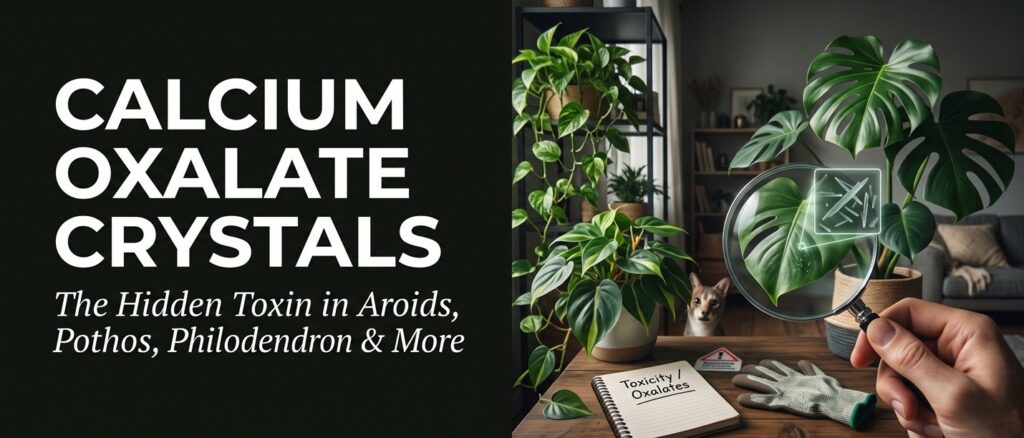
Note: Aglaonema is sometimes listed as toxic because it is an aroid and contains calcium oxalate. The ASPCA currently lists it as non-toxic based on testing, but to be safe, monitor pets around this plant. If your pet is a determined chewer, choose a different plant from this list.
Pet-Safe Succulents
Succulents are tricky for pet owners — many are toxic, including some of the most popular varieties. Jade plant (Crassula ovata), kalanchoe, aloe vera, and Euphorbia species are all toxic. Safe succulents do exist, however, and several are excellent houseplants.
Pet-safe succulents and cacti:
- Haworthia (H. attenuata, H. fasciata, H. cooperi) — small rosettes with white tubercles, very easy, non-toxic
- Echeveria — colorful rosette succulents in pinks, blues, and greens, all species safe for pets
- Sempervivum (hens and chicks) — hardy rosette succulents, safe for pets, can go outdoors in summer
- Christmas cactus (Schlumbergera bridgesii) and Thanksgiving cactus (S. truncata) — both pet-safe despite not being true cacti
- Easter cactus (Hatiora gaertneri) — pet-safe, spring-blooming
- Opuntia species (prickly pear) — pet-safe but the spines can physically injure pets; choose spineless varieties
- Burro's tail (Sedum morganianum) — trailing succulent with plump blue-green leaves, safe for pets
- Hens-and-chicks succulent (Echeveria elegans) — forms dense rosettes, very pet-safe
Pet-Safe Flowering Plants
Flowering houseplants that are also pet-safe tend to be less dramatic than toxic bloomers like lilies and amaryllis, but several produce reliable color and pose no danger. These are the safest flowering plants for homes with curious pets.
Pet-safe flowering houseplants:
- African violet (Saintpaulia) — fuzzy leaves, year-round blooms in purple, pink, white, very pet-safe
- Orchids (Phalaenopsis, Cattleya, Dendrobium, Oncidium) — all orchids tested are safe for pets, dramatic long-lasting blooms
- Begonia (Begonia rex-cultorum hybrids) — grown for dramatic foliage, technically can cause mild mouth irritation but ASPCA lists as non-toxic
- Gerbera daisy (Gerbera jamesonii) — bright daisy flowers in many colors, safe for pets
- Jasmine (Jasminum polyanthum, J. sambac) — fragrant white flowers, pet-safe, can be trained on a trellis
- Lipstick plant (Aeschynanthus radicans) — trailing plant with red tubular flowers, pet-safe
- Cape primrose (Streptocarpus) — gloxinia-like flowers in many colors, pet-safe
Pet-Safe Herbs and Edible Plants
If you want to grow herbs indoors and have pets, most common culinary herbs are completely safe. This gives you a kitchen garden that doubles as a pet-safe plant collection. A few herbs are toxic to pets — notably chives, garlic, and onion — but the herbs below are all confirmed safe.
Pet-safe herbs and edible houseplants:
- Basil (Ocimum basilicum) — all varieties safe for pets, easy from seed
- Cilantro (Coriandrum sativum) — safe, fast-growing, prefers cooler temperatures
- Parsley (Petroselinum crispum) — safe, slow to start but long-lived once established
- Mint (Mentha species) — safe for pets, very vigorous, grow in its own pot
- Thyme (Thymus vulgaris) — safe, drought-tolerant, prefers bright light
- Rosemary (Salvia rosmarinus) — safe, woody herb, needs bright light and excellent drainage
- Wheatgrass (Triticum aestivum) — safe, often grown specifically as a treat for cats
- Lemon balm (Melissa officinalis) — safe, fragrant, easy to grow
⚠️ Warning
Avoid chives (Allium schoenoprasum), garlic, and onions — all Allium species are toxic to cats and dogs and can cause anemia. If you grow herbs in a mixed indoor garden, exclude all Allium species.
What to Do If Your Pet Eats a Plant
Even with a fully pet-safe collection, you may one day catch your pet chewing a plant you cannot identify, or a well-meaning friend may bring a toxic bouquet. The first step is to remove the plant material from the pet's mouth if possible, then identify the plant. Take a photo of the plant and any chewed leaves, and note the time of ingestion.
Call the ASPCA Animal Poison Control Center at (888) 426-4435 (a consultation fee applies) or your veterinarian for guidance. Have the following information ready: the plant species (or a clear photo), the part of the plant ingested (leaf, flower, bulb, etc.), the approximate amount, and the time elapsed since ingestion. Do not induce vomiting unless specifically instructed by a professional — for some toxins, vomiting worsens the damage.
💡 Tip
Save the ASPCA poison control number (888) 426-4435 in your phone contacts before you need it. The few seconds saved in an emergency can make a real difference. Bookmark the ASPCA plant database on your phone's home screen as well.
Only logged-in users can comment
Sign in or create a free account to join the conversation — it takes less than a minute.