

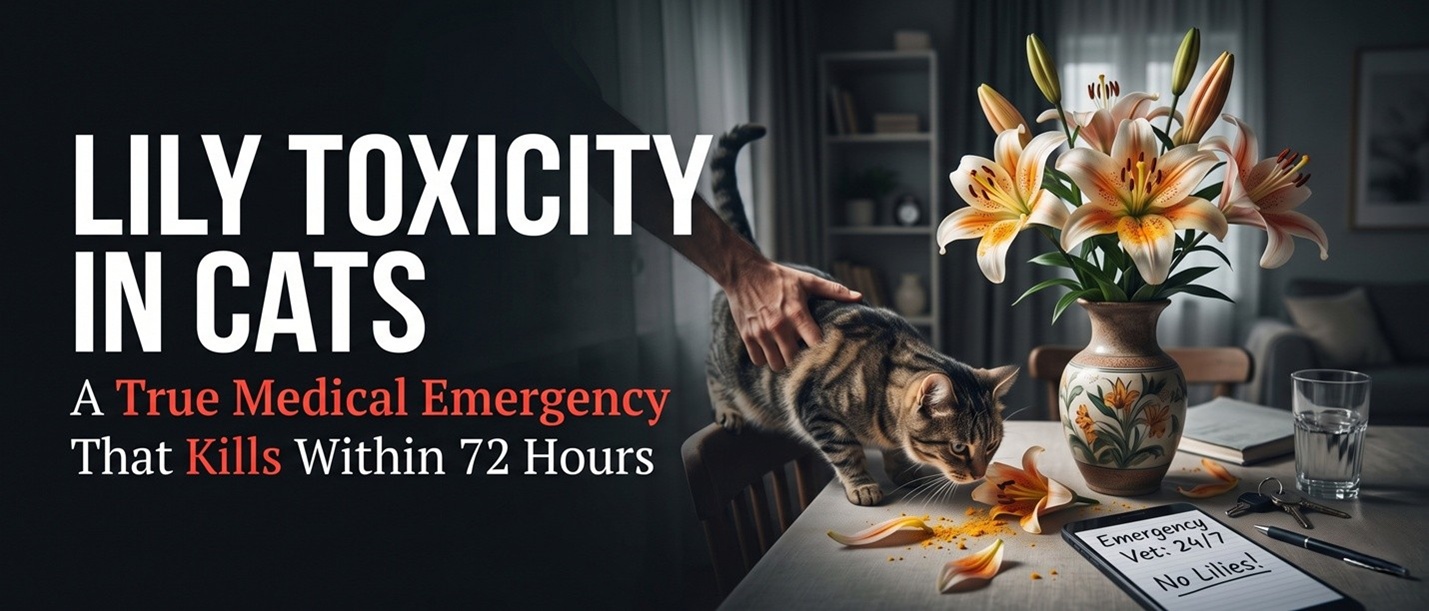
Why Lilies Are Different From Other Toxic Plants
Most toxic houseplants cause immediate, painful but self-limiting symptoms — the plant's defense mechanism hurts the animal enough to make it stop eating, then the symptoms resolve. True lilies (Lilium and Hemerocallis species) work completely differently. They contain a toxin that specifically targets the kidneys of cats, and only cats. Even a tiny amount of pollen groomed off fur, a few bites of a leaf, or water from a lily vase can trigger acute renal failure within 12–72 hours. Without treatment, the mortality rate approaches 100%.
The specific toxin has not been conclusively identified but appears to be a water-soluble compound that destroys the proximal tubules of the feline kidney. Dogs and humans are essentially unaffected — they can eat lily leaves with no symptoms. Cats, however, lack the metabolic pathway to clear the toxin, and even a single exposure can be fatal. This makes lilies one of the most dangerous plants a cat owner can bring into the home.
⚠️ Warning
If you suspect your cat has chewed any part of a true lily — leaf, flower, stem, pollen, or even drunk the vase water — treat it as a medical emergency. Take the cat and the plant (or a photo of the plant) to an emergency veterinarian immediately. Do not wait for symptoms to appear.
Which Lilies Are Dangerous
The deadly lilies belong to two genera: Lilium (true lilies) and Hemerocallis (daylilies). Within these genera, every species and cultivar tested so far has been toxic to cats. Common deadly lilies include Easter lily (L. longiflorum), Tiger lily (L. lancifolium), Stargazer lily (L. orientalis), Asiatic lilies (L. asiaticum hybrids), Rubrum lily (L. speciosum), and all daylilies (Hemerocallis species).
Many plants called 'lily' are not true lilies and have different toxicity profiles. Peace lily (Spathiphyllum) contains only calcium oxalate and causes oral irritation but not kidney failure. Calla lily (Zantedeschia) is similar. Lily of the valley (Convallaria majalis) contains cardiac glycosides and is dangerous but through a completely different mechanism. Peruvian lily (Alstroemeria) is mildly irritating but rarely serious. However, because plant identification is difficult and the consequences of misidentification are severe, treat any unknown 'lily' as if it were a true lily until proven otherwise.
True lilies (Lilium and Hemerocallis) — deadly to cats:
- Easter lily (Lilium longiflorum) — common in spring bouquets
- Tiger lily (Lilium lancifolium) — orange with black spots
- Stargazer lily (Lilium orientalis 'Stargazer') — pink with white edges, intensely fragrant
- Asiatic lily hybrids — many colors, no fragrance
- Oriental lily hybrids — large fragrant blooms in late summer
- Rubrum lily (Lilium speciosum rubrum)
- Daylily (Hemerocallis species) — orange, yellow, red, multicolor
Routes of Exposure
Cats can be poisoned by lilies in ways that surprise owners. The most obvious route is chewing the leaves or flowers, but cats have been fatally poisoned after brushing against a lily and grooming the pollen off their fur, drinking water from a lily vase (the toxin leaches into the water), or walking through spilled pollen and licking their paws. Even the soil from a potted lily can contain enough residual toxin to harm a curious cat.
The lethal dose is shockingly small. As few as one or two leaves, or even a single flower, can kill an adult cat. The pollen is particularly insidious because it sticks to fur and is widely distributed as the cat moves through the home. A cat that sleeps near a vase of lilies can be poisoned without ever touching the plant directly.
💡 Tip
If you receive a bouquet containing lilies and you have a cat, remove and discard the lilies immediately, then wash the vase thoroughly with soap and water before using it again. Even trace amounts of pollen on the vase can be dangerous.
Symptoms and Timeline
Lily poisoning progresses in distinct phases, and early intervention is critical. The first symptoms appear within 2–12 hours and are deceptively mild: drooling, vomiting, loss of appetite, and lethargy. These symptoms often resolve within a few hours, leading owners to think the cat is fine. This is the most dangerous moment — the cat is not recovering, the toxin is moving to the kidneys.
Between 12 and 72 hours after exposure, kidney failure begins. The cat stops urinating or produces very little urine, becomes severely dehydrated, and may show neurological symptoms like disorientation or seizures. By the time kidney failure is visible, the damage may be irreversible. Aggressive intravenous fluids started within 6 hours of exposure have a high success rate; treatments started after 18 hours have a much poorer prognosis.
⚠️ Warning
The 'recovery' between the early vomiting phase and the kidney failure phase is misleading. Do not assume your cat is improving. If a cat has ingested any part of a lily, it must see a veterinarian for at least 72 hours of monitoring and intravenous fluids, even if symptoms seem to resolve.
Veterinary Treatment
If you arrive at the vet within 6 hours of ingestion, they will induce vomiting and administer activated charcoal to bind any toxin still in the digestive tract. Blood tests check baseline kidney values, and the cat is started on aggressive intravenous fluids — typically 2–3 times the normal maintenance rate — to flush the kidneys and maintain urine production. The cat stays hospitalized for 48–72 hours with repeated blood work to monitor kidney function.
If kidney values remain normal through the 72-hour monitoring period, the prognosis is excellent and the cat can go home. If kidney values start to rise, treatment becomes more aggressive and may include dialysis, anti-nausea medications, and supportive care. Cats that survive the acute episode usually have some degree of permanent kidney damage, requiring lifelong management.
Prevention: Just Don't
The simplest advice for cat owners is to never allow true lilies in the home or garden. This includes refusing bouquets that contain lilies, asking florists to substitute non-toxic flowers, and warning friends and family who might gift you flowers. Even dried lily arrangements and lily-scented products can pose a risk. The risk-to-reward ratio is simply too poor: a beautiful flower that can kill your cat in 72 hours is not worth having.
If you want lily-like blooms without the danger, consider non-toxic alternatives. Orchids (Phalaenopsis, Cattleya) are completely safe for cats and offer dramatic long-lasting blooms. African violets, begonias (with the exception of tuberous begonias, which are mildly toxic), and gerbera daisies provide bright colors. For the architectural look of a lily stem, try snapdragons or stock flowers in bouquets.
Only logged-in users can comment
Sign in or create a free account to join the conversation — it takes less than a minute.