

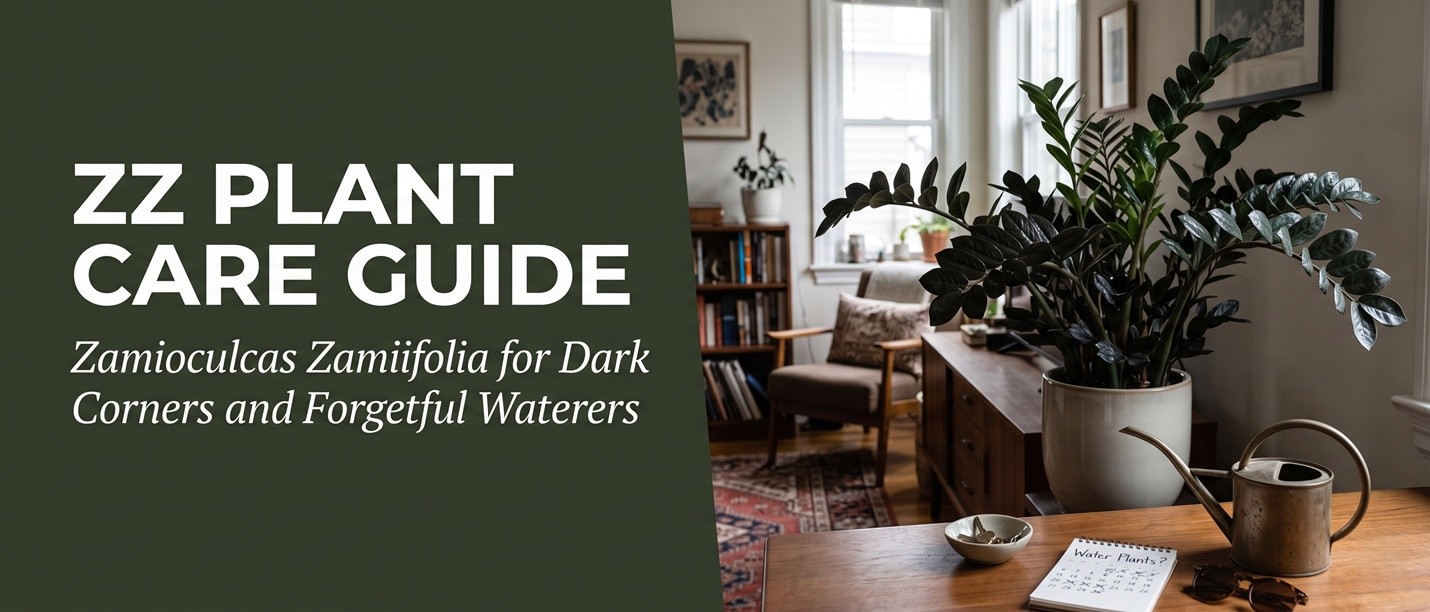
What Makes the ZZ Plant Special
Zamioculcas zamiifolia, universally known as the ZZ plant, is the houseplant equivalent of a camel. Native to dry forest floors in eastern Africa from Kenya to South Africa, it evolved thick waxy leaves and potato-like rhizomes that store water for months between rainfalls. This evolutionary background is why the ZZ survives neglect that would kill almost any other plant — and also why most care problems come from doing too much rather than too little.
The plant grows slowly, producing only 3–6 new stems per year in typical indoor conditions. Each stem is upright, 60–90 cm tall at maturity, lined with glossy dark green leaflets that look almost artificial in their perfection. Newer cultivars include 'Raven' with near-black foliage and 'Zenzi', a compact dwarf form with densely packed leaves.
💡 Tip
If you travel frequently, work long hours, or just want a plant that forgives you for forgetting, the ZZ is the answer. The only reliable ways to kill it are overwatering or freezing it.
Light: Anywhere from Low to Bright Indirect
The ZZ plant tolerates an exceptional range of light conditions. It will survive in north-facing windows, in office corners lit only by overhead fluorescents, and even in windowless rooms if the lights are on for at least 8 hours a day. However, 'survive' and 'thrive' are different — in very low light the plant essentially stops growing and may drop older stems over a year or two.
For real growth, place the plant in bright indirect light: near an east or west window, or set back from a south window. A few hours of gentle morning sun is ideal. Avoid direct midday sun, which scorches the leaves with pale brown patches within hours. If you have been keeping the plant in low light and want to move it brighter, do so gradually over two weeks to let the leaves acclimate.
Watering: Less Is Always More
The single biggest mistake with ZZ plants is watering on a schedule. The plant's rhizomes store so much water that it can go 2–3 months between waterings in winter without complaint. Watering every week or two — the standard advice for most houseplants — is a near-guaranteed path to root rot and yellowing stems.
Instead, check the soil with a finger or chopstick pushed to the bottom of the pot. If you feel any moisture at all, wait. If the soil is bone-dry all the way through, water thoroughly until it runs from the drainage holes, then empty the saucer. In practice, this means watering every 3–4 weeks in summer and every 6–8 weeks in winter.
⚠️ Warning
Yellowing lower stems on a ZZ plant almost always indicate overwatering. If you catch it early, stop watering immediately and let the soil dry completely. If multiple stems are yellow and soft, unpot the plant, cut away any mushy rhizomes with a sterile knife, and repot into fresh dry soil.
Soil and Repotting
Use a fast-draining mix — equal parts standard potting soil, perlite, and orchid bark works well. The rhizomes need oxygen around them; dense soil leads to rot. Choose a pot only 2–3 cm wider than the root ball and ensure it has generous drainage holes. Ceramic and terracotta are better than plastic because they allow some air exchange through the walls.
Repot only when the rhizomes have filled the pot and are visibly pushing against the walls — typically every 2–3 years. ZZ plants actually prefer being slightly rootbound and produce more new stems when their roots are constrained. Spring is the best time to repot, when the plant is entering its active growth phase.
Propagation: Three Reliable Methods
The ZZ plant is one of the easiest houseplants to propagate, though all methods are slow. Division is fastest and produces a usable plant in weeks. Leaf cuttings take 6–12 months to form a rhizome but produce many new plants from a single leaf. Stem cuttings root in 4–6 weeks and skip the rhizome-formation stage.
Propagation methods in order of speed:
- Division: At repotting time, gently pull apart the rhizome mass into 2–3 sections, each with at least 2 stems and visible roots. Pot each section separately. New growth appears in 4–8 weeks.
- Stem cuttings: Cut a healthy stem at the base with a sterile knife, remove the lower leaflets, and place the cutting in water or moist perlite. Roots form in 4–6 weeks at 22–26°C.
- Leaf cuttings: Snap off a single leaflet (with its small stalk) and push the stalk end into moist perlite or seed-starting mix. Cover with a humidity dome. A small rhizome forms in 6–12 months, then a new stem emerges.
Toxicity and Pets
Like all aroids, the ZZ plant contains insoluble calcium oxalate crystals. Chewing the leaves causes immediate burning, swelling, and drooling in cats, dogs, and humans. The plant is not considered lethally toxic, but it is unpleasant enough that pets rarely take more than one bite. Keep the plant out of reach of curious cats and small children, and wash your hands after handling cut stems — the sap can irritate sensitive skin.
Common Problems and Quick Fixes
Yellow stems mean overwatering — see the warning above. Soft, mushy stems at soil level mean advanced root rot; cut healthy stems above the damage and root them in water to save the plant. Brown crispy tips on leaflets usually mean the plant has gone too long without water, or that the air is extremely dry (typically winter heating). Pale, stretched new growth indicates too little light — move the plant to a brighter location.
Dusty leaves are common because the glossy surface holds dust, which reduces photosynthesis. Wipe leaves monthly with a soft damp cloth, or give the plant a lukewarm shower in the bathroom, letting it drip dry before returning it to its spot. Avoid leaf-shine products, which clog the stomata and suffocate the leaf.


Only logged-in users can comment
Sign in or create a free account to join the conversation — it takes less than a minute.