

Why Pot Material Matters More Than People Think
Walk into any garden center and you will see rows of pots in different materials, often with little to indicate why one would be better than another. Most buyers pick by appearance or price and assume the plant will adapt. The truth is that pot material directly affects three critical variables: how quickly the soil dries out, how much air reaches the root zone, and how heavy the planter is to move. Choose the wrong material and even a healthy plant will struggle.
This guide compares the five most common pot materials used in container gardening — terracotta, plastic, glazed ceramic, fabric, and self-watering planters — across the variables that actually matter: breathability, moisture retention, weight, durability, cost, and which plants thrive in each. The goal is to give you a decision framework so you can match the pot to the plant rather than the other way around.
💡 Tip
As a quick rule: dry-climate plants (succulents, cacti, Mediterranean herbs) want breathable pots like terracotta or fabric. Moisture-loving plants (ferns, peace lilies, calatheas) want plastic or glazed ceramic that holds water longer. Heavy feeders like tomatoes and peppers often do best in fabric pots that air-prune the roots.
Terracotta: The Classic Breathable Pot
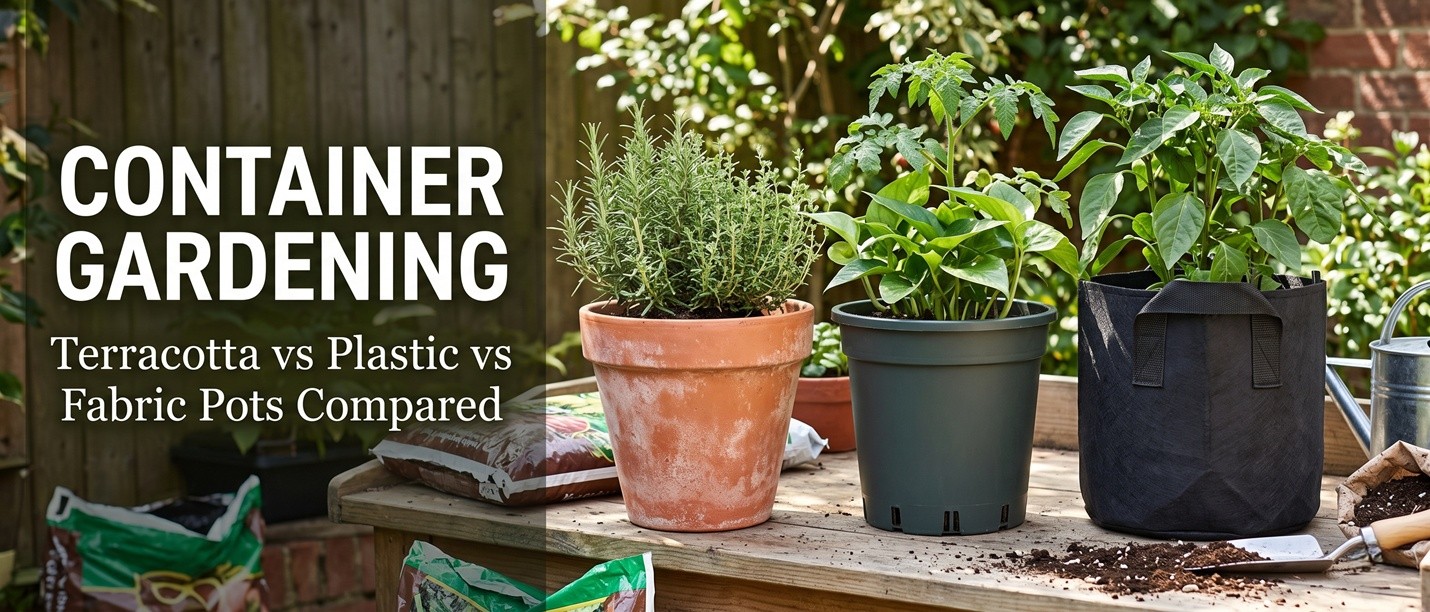
Terracotta is the oldest cultivated pot material — fired clay that has been used for at least 5,000 years. Its defining feature is porosity: the walls of the pot absorb water from the soil and evaporate it from the outer surface. This pulls moisture away from the root zone faster than non-porous materials and brings fresh air into the soil as water leaves. For plants that hate sitting wet, this is exactly what you want.
The trade-off is that terracotta dries out quickly. In hot climates or with moisture-loving plants, you may need to water every day or even twice a day in summer. Terracotta is also heavy and breakable — a 30 cm filled terracotta pot can weigh 10 kg and shatters if dropped on a hard surface. It also develops a white mineral crust over time from hard water, which is harmless but some find unsightly. The crust can be scrubbed off with vinegar and a stiff brush.
Best plants for terracotta:
- Succulents and cacti (Echeveria, Haworthia, Aloe, Opuntia)
- Mediterranean herbs (rosemary, thyme, oregano, lavender)
- Bulbs that resent wet soil in dormancy (oxalis, cyclamen)
- Citrus trees, which hate soggy roots
- Any plant that has been struggling with root rot in plastic
Plastic: Lightweight and Moisture-Retentive
Plastic pots are the workhorse of container gardening. They are cheap, lightweight, available in any size, and they hold moisture far longer than terracotta because the walls do not breathe. This makes them ideal for moisture-loving plants, for plants that you cannot water every day, and for large planters that need to be moved seasonally. A 30 cm filled plastic pot weighs about 4 kg, compared to 10 kg for the equivalent terracotta.
The downsides are real, however. Cheap plastic pots become brittle in UV light and crack after 2–3 seasons outdoors. The lack of breathability means soil stays wet longer, which is good for thirsty plants but bad for plants prone to root rot. Plastic also lacks the visual warmth of natural materials — though newer matte-finish plastic pots in earth tones have narrowed the aesthetic gap considerably.
Modern plastic pots often include built-in features that make them more useful than basic nursery pots: self-watering reservoirs, attached saucers, and UV-stabilized formulations that last 5–10 years outdoors. For apartment balcony gardens and rental homes where weight matters, plastic is usually the right choice.
Glazed Ceramic: Beautiful but Heavy
Glazed ceramic pots combine the weight and durability of fired clay with a glass-like coating on the outer surface that makes them non-porous. The result is a pot that holds moisture like plastic but has the substantial feel and decorative look of terracotta. They are the most aesthetically versatile pots available, with finishes ranging from solid jewel tones to intricate patterns to faux-stone textures.
The major trade-off is weight. A large glazed ceramic pot can weigh 15–20 kg empty, and 40+ kg filled. Moving one once it is planted is a two-person job at best, and they are impractical for balconies with weight limits or for plants that need to come indoors in winter. Glazed ceramic is also the most fragile of the common pot materials — a single freeze with moist soil inside will crack the pot, because water expands as it turns to ice and the glaze prevents the clay from absorbing the stress.
⚠️ Warning
Never leave glazed ceramic pots outdoors through a freezing winter with moist soil inside. The freeze-thaw cycle will crack the pot, often destroying it completely. Empty and store them indoors or in a sheltered spot once the plants are removed in autumn.
Fabric Pots: The Root-Pruning Revolution
Fabric pots (sometimes called 'grow bags') are the newest mainstream container option and they solve a problem that solid-walled pots cannot: root circling. When a root hits the inside wall of a plastic or ceramic pot, it has no choice but to turn and continue growing along the wall, eventually forming a tight spiral that constricts the plant. Fabric pots allow air to reach the root tip through the wall, which stops the root from growing (a process called 'air pruning') and forces the plant to push out new lateral roots instead. The result is a denser, more branched root system that uses the entire soil volume.
Fabric pots are also extremely lightweight, drain exceptionally well, and fold flat for storage when not in use. They are the preferred container for serious vegetable growers, especially for tomatoes, peppers, potatoes, and root crops. The downsides are aesthetic — most fabric pots look like black or tan shopping bags, not decorative planters — and they dry out faster than plastic, requiring more frequent watering. Some newer fabric pots come in attractive colors and textures that work well on patios and balconies.
Best plants for fabric pots:
- Tomatoes, peppers, and eggplants — root pruning dramatically increases yield
- Potatoes — easy to harvest by dumping the bag, no digging required
- Root crops (carrots, beets, radishes) — loose soil and good drainage produce perfect roots
- Any plant that has become potbound in a plastic pot and needs rejuvenation
- Seedlings and starts being hardened off — fabric handles make them easy to move
Self-Watering Planters: The Low-Maintenance Option
Self-watering planters have a built-in water reservoir at the bottom, separated from the soil by a false floor with a wick. The soil draws water up from the reservoir as it dries, keeping the root zone consistently moist without daily attention. A fill tube lets you top up the reservoir from above, and an overflow hole prevents overwatering by draining excess water once the reservoir is full.
These planters are excellent for busy gardeners and for plants that want consistent moisture — tomatoes, peppers, leafy greens, and most flowering annuals. They eliminate the 'feast or famine' watering cycle that stresses plants and reduces yield. They are not suitable for plants that need to dry out between waterings (succulents, cacti, Mediterranean herbs) or for plants prone to root rot if kept constantly wet.
The downside of self-watering planters is cost — they are typically 2–3 times the price of equivalent plastic pots — and the reservoir can become a mosquito breeding ground if the overflow hole is blocked or if the water sits for more than a week. Flush the reservoir completely every few weeks to prevent algae and salt buildup.
How to Choose the Right Pot for Your Plant
Match the pot to the plant's water preference first, the location's weight constraints second, and aesthetics last. A plant that needs dry soil in a heavy glazed pot on a balcony will struggle; the same plant in a fabric pot or terracotta will thrive. A moisture-loving plant in terracotta will need twice-daily watering in summer; the same plant in plastic or self-watering will be happy with weekly watering.
When in doubt, start with plastic. It is the most forgiving material, the cheapest, and works for the widest range of plants. Upgrade to terracotta for dry-climate plants, fabric for vegetables, glazed ceramic for statement specimens that will not need to be moved, and self-watering for plants that want consistent moisture. Building a small collection of each material lets you match every plant to its ideal container without overthinking.
💡 Tip
Keep the nursery pot your plant came in. You can drop it inside a more decorative outer pot (a 'cachepot') and swap plants in and out as they need watering or repotting. This is how botanical gardens and interior landscapers manage large collections efficiently — and it lets one beautiful ceramic outer pot serve many different plants over time.
Only logged-in users can comment
Sign in or create a free account to join the conversation — it takes less than a minute.