

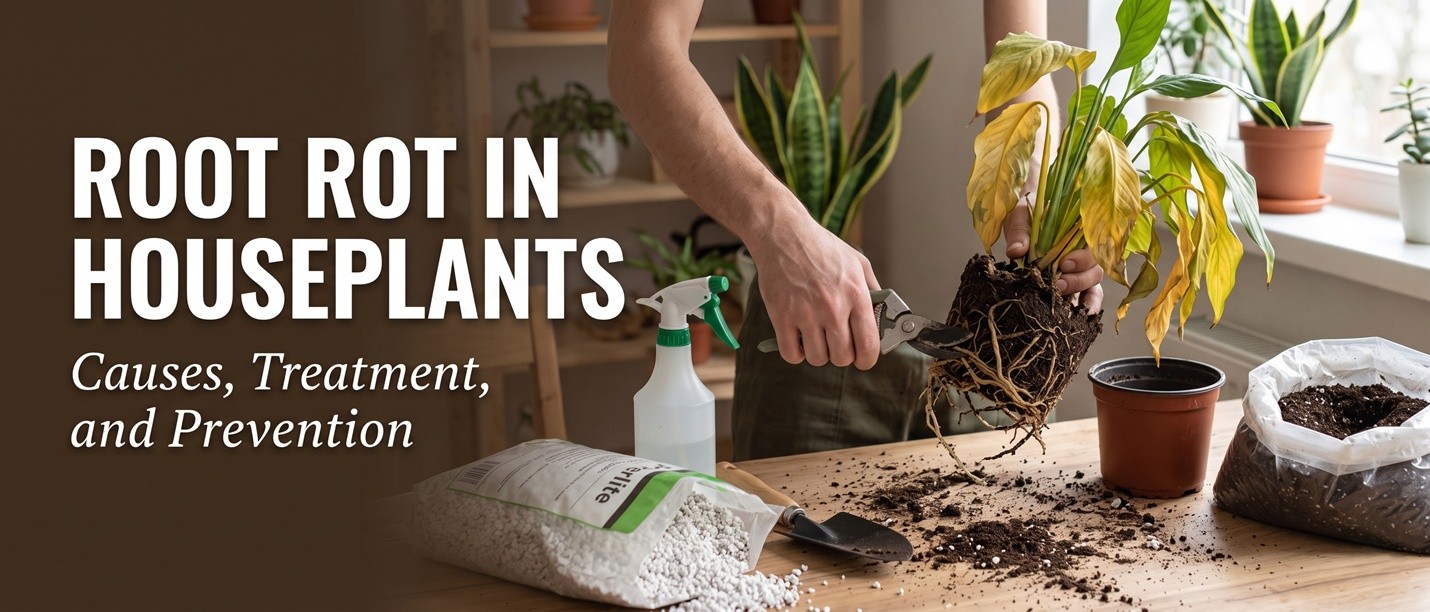
What Root Rot Actually Is
Root rot is not a single disease but a syndrome caused by a combination of factors: waterlogged soil, oxygen deprivation in the root zone, and opportunistic fungi (most commonly Pythium, Phytophthora, Rhizoctonia, and Fusarium) that thrive in anaerobic conditions. When soil stays saturated for more than 48 hours, the air pockets that roots depend on for oxygen collapse. Without oxygen, root cells die within days, and the dead tissue is rapidly colonized by fungi that spread upward through the root system and into the stem.
The reason root rot is so deadly is that the symptoms appear late. By the time you notice yellowing leaves, wilting despite wet soil, or a soft stem base, the damage to the root system is already extensive — often 70 percent or more of the roots are dead. The plant cannot absorb water effectively (which is why a rotted plant wilts despite wet soil), and the fungal infection has often reached the stem where it cannot be surgically removed. Successful rescue depends on catching the problem early, before the rot has reached the main stem.
⚠️ Warning
If the stem itself is soft, mushy, or has black sunken lesions at the soil line, the rot has reached the vascular tissue and the plant is unlikely to survive even with aggressive treatment. In this case, take cuttings from any remaining healthy growth above the rot line and propagate them — this is the only way to save the genetic material. Trying to save the mother plant at this stage is usually futile.
Early Warning Signs
The earliest signs of root rot are subtle and easy to miss. The plant may drop one or two lower leaves that turn uniformly yellow before falling — distinct from the brown crispy tips of underwatering. Growth slows noticeably; new leaves are smaller than previous ones and may be paler green. The soil stays wet longer than usual between waterings — if it has been a week and the top of the soil is still visibly moist, something is wrong with either your drainage or the roots themselves.
More advanced signs include wilting despite soil being wet, leaves that develop brown or black soft patches, a generally dull or drooping posture that does not improve after watering, and a sour or swampy smell from the soil. The smell is the most diagnostic — healthy soil smells earthy and pleasant; rotting soil smells like a swamp or like sulfur. If you notice any of these advanced signs, unpot the plant immediately to inspect the roots. Waiting even a few more days can be the difference between saving and losing the plant.
💡 Tip
Get into the habit of lifting your potted plants regularly. A plant that needs watering will feel noticeably lighter than one that has just been watered. Over time, you will develop a 'weight sense' that tells you when to water more reliably than any moisture meter. A plant that feels heavy but looks wilted is almost certainly suffering from root rot — the soil is wet, but the roots cannot absorb it.
Inspecting the Root System
To inspect the roots, water the plant lightly an hour before unpotting — this softens the root ball and reduces breakage. Gently slide the plant out of its pot by inverting it and supporting the soil with your hand. Do not pull on the stem. Examine the root ball: healthy roots are firm, white or light tan, and have a slightly fuzzy appearance from root hairs. Rotting roots are brown or black, soft, slimy, and may slough off the inner core when pulled gently. The rot often starts at the bottom of the pot and works upward.
Use a clean, sharp knife or pruning shears (wiped with rubbing alcohol to sterilize) to cut away all soft, brown, or slimy roots. Cut back into firm, healthy tissue even if it means removing 80 percent of the root system — a plant can regrow roots but cannot recover from lingering rot. Also remove any soil that adheres to the rotted sections; this soil is loaded with fungal spores and must be discarded. Rinse the remaining healthy roots under room-temperature running water to remove all the old soil, since the old soil may contain dormant pathogens.
Treatment Protocol: Surgery and Repotting
After removing all rotted roots, dip the remaining root system in a fungicidal solution. The most accessible option is a 10 percent hydrogen peroxide solution (one part 3 percent household hydrogen peroxide to nine parts water) for 5 to 10 minutes. This kills fungal spores on contact and oxygenates the root tissue. Alternatively, use a commercial fungicide containing thiophanate-methyl or copper-based compounds, following label dilution. For organic growers, a neem oil drench (5 ml per liter of water) provides some protection, though it is less effective than chemical fungicides against established rot.
Repot the plant into a clean pot (scrub the old pot with bleach solution, or use a new pot) with fresh, fast-draining potting mix. The mix should be at least 30 percent perlite or pumice by volume for most houseplants, and 50 percent or more for succulents. Do not reuse the old soil. Water the plant lightly with the fungicidal solution to settle the soil around the roots, then do not water again until the top 5 centimeters of soil are dry. Place the plant in bright indirect light but out of direct sun, and maintain high humidity around the leaves with a clear plastic bag or humidity dome for the first two weeks to reduce transpiration stress while the root system regenerates.
⚠️ Warning
Do not fertilize a plant recovering from root rot for at least 6 to 8 weeks. The reduced root system cannot absorb nutrients effectively, and fertilizer salts can burn the new delicate root tissue. Wait until you see clear signs of new growth (a healthy new leaf unfurling) before resuming a diluted (quarter strength) fertilizer schedule. Resume normal fertilization only after 3 months.
Prevention: The Five Cultural Rules
Root rot is preventable through five cultural practices. First, every pot must have a drainage hole — no exceptions. Decorative cache pots without drainage are fine as outer sleeves for plastic nursery pots, but the plant must never sit in standing water. Empty the cache pot within an hour of watering. Second, use a well-draining potting mix appropriate for the plant type — never garden soil, never cheap potting soil that turns to mud when wet. A basic houseplant mix should be 2 parts peat or coir, 1 part perlite, 1 part bark or charcoal. Adjust the ratio toward more perlite for succulents and toward more coir for moisture-loving plants like ferns.
Third, water based on the plant's needs, not on a fixed schedule. Most houseplants prefer to dry partially between waterings — let the top 2 to 5 centimeters of soil dry before watering again. Use your finger or a wooden chopstick to check soil moisture; do not water on a timer. Fourth, ensure adequate airflow around plants. A small fan running on low for a few hours a day reduces stagnant humidity around the foliage and the soil surface, which discourages fungal growth. Fifth, choose the right pot size. A pot that is too large holds excess wet soil around a small root system, virtually guaranteeing rot. Pot up by only 2 to 3 centimeters in diameter at each repotting.
💡 Tip
Add a 1-centimeter layer of horticultural charcoal or activated carbon at the bottom of the pot when repotting. Charcoal absorbs excess water, neutralizes odors, and inhibits fungal growth. It is not a substitute for proper drainage, but it adds a margin of safety for plants that are prone to root rot (calathea, maranta, alocasia, anthurium). A small bag of horticultural charcoal costs about $5 and lasts through dozens of repottings.
Plants Most Susceptible to Root Rot
Some plants are genetically predisposed to root rot and require extra care with watering. Calathea, maranta, and other prayer plants have thin, fine roots that rot easily if the soil stays too wet or too dry — they want consistently moist but not soggy soil. Alocasia and colocasia (elephant ears) have bulb-like rhizomes that rot quickly in wet soil, especially in winter when the plant is dormant. Anthurium and philodendron are epiphytic in nature and need very airy soil. Citrus trees in containers are notorious for root rot if overwatered.
Succulents and cacti are the opposite — they tolerate dry soil perfectly but rot almost instantly if watered too frequently. The single biggest mistake new plant owners make is watering a succulent on the same schedule as a foliage plant. Most succulents want to dry completely between waterings, which in practice means watering every 3 to 4 weeks in summer and every 6 to 8 weeks in winter. If in doubt, do not water — a succulent can survive months of drought but cannot recover from a single overwatering event.
Only logged-in users can comment
Sign in or create a free account to join the conversation — it takes less than a minute.