

Making the Most of Small Spaces with Plants
Small living spaces present unique challenges for plant enthusiasts, but they also offer creative opportunities that larger rooms simply can't match. The key is thinking beyond the traditional potted plant on a windowsill and embracing vertical space, multi-functional arrangements, and clever plant selections that deliver maximum greenery with minimum footprint. Whether you're working with a studio apartment, a tiny balcony, or just a small corner of a shared space, these strategies will help you create a lush indoor garden without sacrificing precious square footage.
Vertical Gardening: Grow Up, Not Out
The single most impactful strategy for small space plant lovers is utilizing vertical space. Walls, doors, and overhead areas represent untapped real estate for your plant collection. Vertical gardening transforms bare walls into living art installations while keeping your floor space clear for living.
- Wall-mounted planters — Modular planter systems like felt pocket organizers or ceramic wall planters allow you to create living walls without structural modifications. Arrange them in patterns for visual impact, and choose trailing plants like pothos, string of pearls, or burro's tail for a cascading effect.
- Floating shelves — Stagger floating shelves at different heights to display a curated collection of small plants. Mix trailing, upright, and bushy varieties for visual interest. This approach works beautifully in narrow hallways, beside windows, or above furniture.
- Hanging baskets — Macrame hangers, ceiling hooks, and bracket-mounted baskets keep plants at eye level while freeing surface space. Ferns, spider plants, and ivy are excellent choices for hanging displays.
- Over-the-door organizers — Fabric shoe organizers make perfect vertical herb gardens when filled with small pots. Hang one on a balcony door or kitchen wall for an instant herb garden that takes up zero counter space.
- Trellis and climbing supports — Install a small trellis in a corner pot and train climbing plants like philodendron or monstera to grow upward. This creates dramatic height without spreading outward.
Best Compact Plants for Small Apartments
Choosing the right plants is crucial when space is limited. Look for varieties that stay compact, grow slowly, or can be easily maintained at a small size through pruning. Here are the best options for tight quarters.
- Air Plants (Tillandsia) — Requiring no soil at all, air plants can be displayed on driftwood, in glass terrariums, or mounted on walls. They need only a weekly soak in water and bright indirect light, making them the ultimate space-saving plant.
- Succulents and Mini Cacti — These naturally compact plants come in endless varieties and fit perfectly on windowsills, bookshelves, and tiny side tables. Group several in a shallow dish for a miniature desert garden.
- Peperomia — With over 1,000 species ranging from tiny trailing varieties to compact bushy types, peperomias offer incredible diversity in a small package. Most stay under 12 inches tall and prefer the same conditions as most homes provide.
- Nerve Plant (Fittonia) — These diminutive plants rarely exceed 6 inches tall and feature stunning veined leaves in pink, red, or white. They're perfect for terrariums and small decorative pots on desks and shelves.
- Baby Tears (Soleirolia soleirolii) — This creeping groundcover forms a lush, moss-like mat in tiny pots and terrariums. Its delicate appearance belies its toughness — it thrives in humidity and indirect light.
Multi-Functional Plant Arrangements
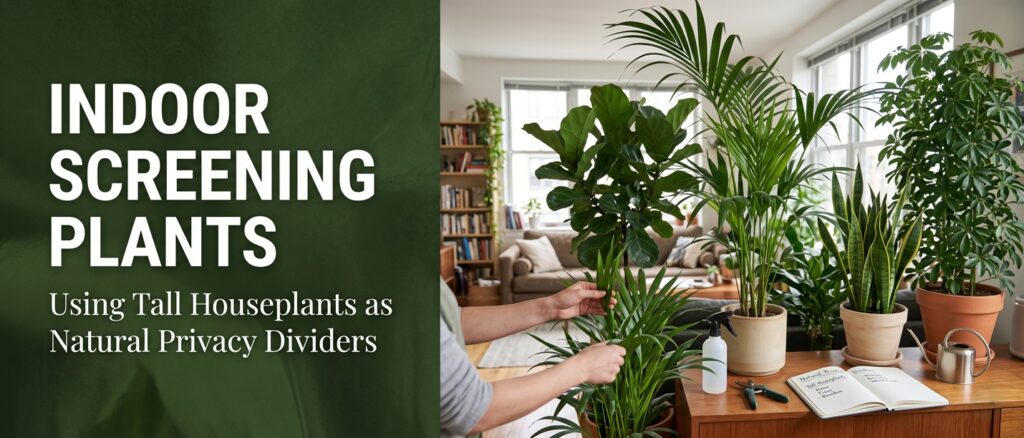
In small spaces, every element should serve multiple purposes. Consider these dual-purpose plant arrangements that combine greenery with practical function: use a large floor plant as a natural room divider between living and sleeping areas, place a tall plant stand with trailing vines to screen an unsightly corner, or arrange herb pots on a kitchen windowsill where they double as both decoration and cooking ingredients. Window boxes mounted inside create a greenhouse effect while providing fresh herbs year-round.
💡 Pro Tip: The Rule of Three
When arranging plants in small spaces, follow the rule of three: combine one tall plant (like a snake plant or dracaena), one medium bushy plant (like a peperomia or peace lily), and one trailing plant (like pothos or string of pearls) in each grouping. This creates visual depth and interest without requiring many individual surfaces. The varying heights draw the eye around the space, making it feel larger and more intentionally designed.
Only logged-in users can comment
Sign in or create a free account to join the conversation — it takes less than a minute.