

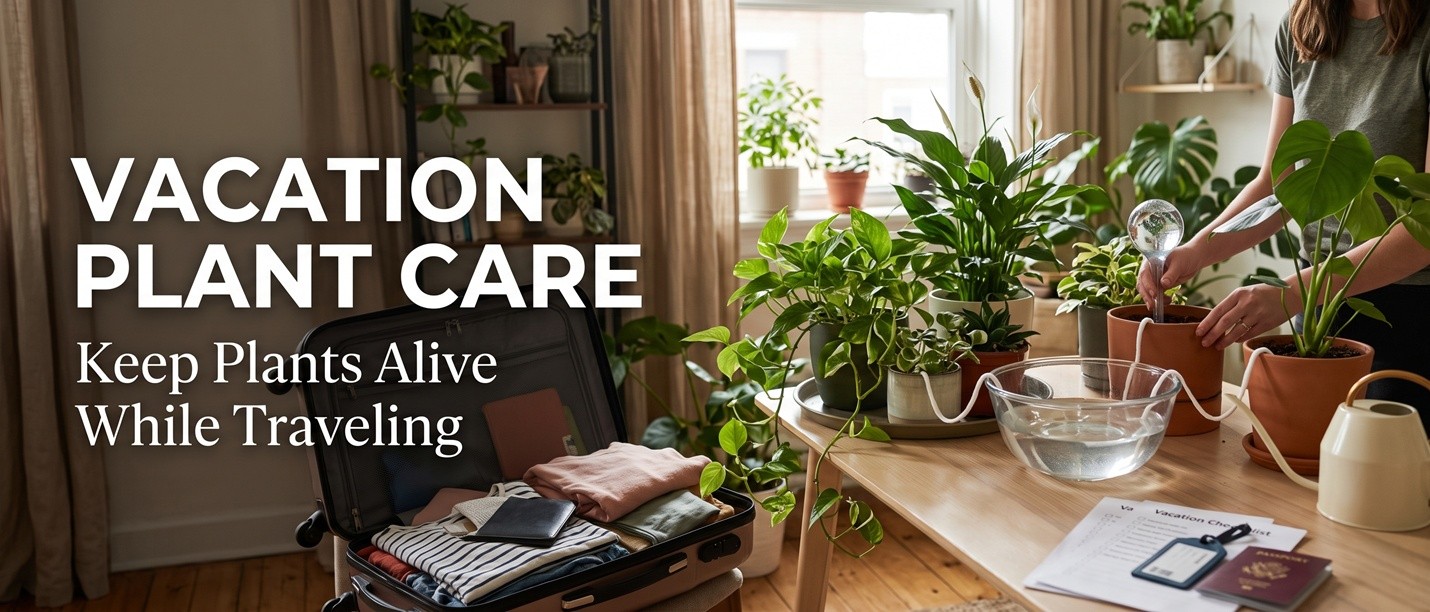
Why Vacation Plant Care Deserves a Real Plan
Most plant deaths during vacations are not caused by the length of the trip — they are caused by panic overwatering the morning of departure. Owners see a calendar full of empty days and dump a gallon of water into a pot that was already moist, then leave the plant sitting in a saucer of standing water for two weeks. The roots rot, the plant collapses, and the owner returns convinced that plants simply cannot survive without daily attention.
The truth is the opposite. Healthy houseplants are remarkably good at surviving a week or two of neglect if you set them up correctly before you leave. The goal of vacation plant care is not to keep the plant growing — it is to slow the plant down so it uses less water while you are gone, and to provide a backup moisture source for the thirsty exceptions. Once you understand these two principles, even a three-week trip becomes manageable without hiring a sitter.
💡 Tip
The single most effective pre-trip action is moving every plant out of direct sun and away from heating or cooling vents. Light and warmth drive transpiration, which is what dries out the soil. Dropping the light by 30 percent and stabilizing the temperature can cut water use in half for the duration of your trip.
Pre-Trip Preparation: The 48-Hour Checklist
Start your vacation plant prep two days before departure, not the morning of. This gives you time to observe how the soil drains after a thorough watering and to catch any pest or disease problems while you can still act on them. A plant that has a spider mite outbreak on day one of your trip will be badly damaged by the time you return; a plant you treat before leaving will hold its own.
The 48-hour pre-trip checklist:
- Inspect every plant for pests, yellowing leaves, and signs of root stress. Treat any issues before leaving.
- Water deeply until water runs from the drainage hole, then empty all saucers 30 minutes later. Never leave a plant sitting in a filled saucer while you are away.
- Move plants away from south- and west-facing windows. Bright indirect light is fine; direct sun is not.
- Close curtains or sheer blinds to filter light further. A sheer curtain cuts transpiration by 20–30 percent.
- Move plants away from AC vents, radiators, and cold drafts. Stable temperature is more important than usual while you are gone.
- Group plants together. A cluster of plants raises local humidity by 5–10 percent compared with scattered placement.
- Top up humidity trays and consider adding a room humidifier on a timer if you have ferns, calatheas, or marantas.
Short Trips (3 to 7 Days): No Tech Required
For trips under a week, most healthy houseplants will simply be fine. The pre-trip checklist above is all you need. Succulents, snake plants, ZZ plants, pothos, and most ficus species can go seven to ten days between waterings in normal conditions, and even longer if you have moved them away from bright light. The plants that need attention are the thirsty ones — ferns, calatheas, peace lilies, and any plant in a small pot with a high surface-to-soil ratio.
For these thirsty exceptions, the easiest insurance policy is a humidity tent. Take a clear plastic bag (a dry-cleaning bag works well for larger plants) and drape it loosely over the plant, supporting it with stakes so the plastic does not touch the leaves. The bag traps transpired moisture and creates a mini-greenhouse that holds humidity near 100 percent. This slows water loss dramatically and is enough to carry a moisture-loving plant through a week with no additional watering.
⚠️ Warning
Never put a humidity tent over a plant in direct sun. The trapped heat will cook the foliage in an hour. Humidity tents only work in low-to-medium indirect light. Also remove the tent the moment you return, because stagnant humid air encourages fungal infections over time.
Medium Trips (1 to 2 Weeks): Watering Wicks and Capillary Mats
For trips of one to two weeks, you need an active moisture delivery system. The two simplest options are watering wicks and capillary mats. A watering wick uses cotton rope or nylon paracord to draw water from a reservoir into the soil by capillary action. One end of the wick is buried a few centimeters into the root ball; the other end dangles into a jug of water placed slightly below the pot. Water travels along the wick as the soil dries, delivering a slow steady supply that matches the plant's actual usage.
Capillary mats work on the same principle but for many plants at once. You place a layer of felt or thick cotton fabric on a waterproof tray, saturate it with water, and set your potted plants on top. (The pots must have drainage holes and the soil must be in direct contact with the mat — remove any plastic saucer inserts.) The mat stays wet and the soil draws moisture up through the drainage hole as needed. Commercial capillary matting is available, but a thick towel in a pinch works for a single trip.
💡 Tip
Test any wick or capillary setup a week before your trip. Set it up, water the plant normally, and observe how the reservoir level drops over 3-4 days. You want to confirm the wick is actually drawing water and that the plant is not sitting in soggy soil. Adjusting the wick diameter or the reservoir height lets you tune the flow rate.
Long Trips (2 to 4 Weeks): Self-Watering Pots and Plant Sitters
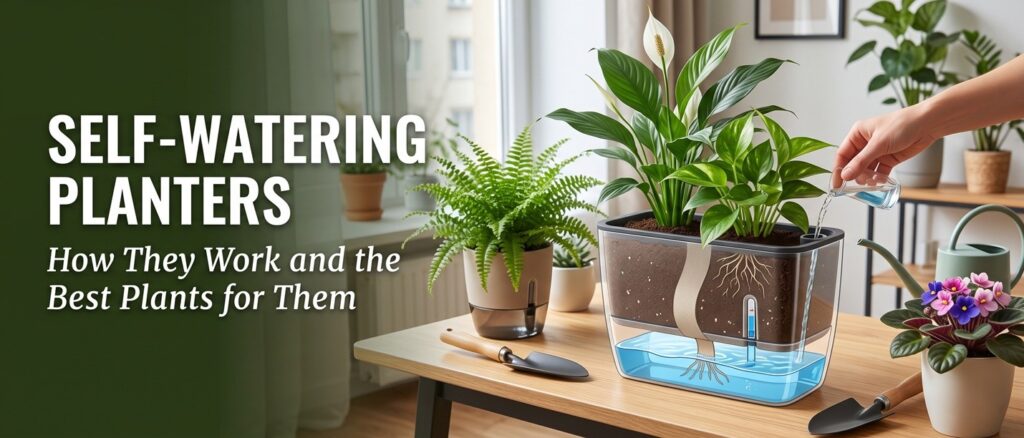
Two to four weeks is the upper limit for unattended houseplant care. For trips in this range, self-watering pots with large reservoirs are the most reliable option. A self-watering pot has a built-in water reservoir at the bottom separated from the soil by a perforated platform; the soil draws water up through a wick or through direct contact with the reservoir. A 30 cm self-watering pot can hold 2-3 liters of water, enough to keep a mature peace lily alive for three weeks.
For plants that cannot be repotted into self-watering containers, a plant sitter is the right answer. The key is to make the sitter's job foolproof. Pre-water every plant yourself before you leave, then leave written instructions that say only what the sitter needs to do — not full care guides. A simple table with plant name, location, water amount, and frequency is more useful than verbal instructions. Mark the soil moisture level with a colored sticker: red means 'water me now', green means 'check next visit', and the sitter simply waters anything marked red.
What to tell your plant sitter:
- Specific water amount per plant (e.g., 200 ml for the snake plant, 500 ml for the monstera). Vague 'water as needed' leads to overwatering.
- Frequency — every 5 days, every 7 days, etc. Set a calendar reminder for them.
- Drainage reminder: 'Always empty the saucer 30 minutes after watering.'
- A photo of each healthy plant so they can spot problems.
- Permission to text you photos if anything looks wrong — early detection saves plants.
- Clear instructions for what NOT to do: no fertilizer, no repotting, no moving plants around.
Plants That Will Probably Die No Matter What
Some plants are simply not good candidates for unattended care, and recognizing this in advance saves you the guilt of returning to a dead plant. Maidenhair ferns, calatheas in tiny pots, recently propagated cuttings with no root system, and any plant showing signs of stress before you leave are all high-risk. For these, either accept the loss, give them to a friend to babysit, or use a self-watering system with a large reservoir plus a humidity tent.
Recently repotted plants are another category to watch. A plant that was just moved up to a larger pot has excess wet soil around a root system that has not grown into it yet. This soil stays wet far longer than the plant can use it, which is a recipe for root rot over a long trip. If you have a plant that needs repotting, either do it at least a month before your trip or wait until you return.
Returning Home: The Post-Trip Recovery Plan
When you return, do not panic-water everything. Inspect each plant, check soil moisture with your finger, and water only those that are actually dry. Many plants will have used less water than you expected and may still be moist a week later. A thorough inspection also lets you catch any pest outbreaks or fungal issues that started while you were gone.
Move plants back to their normal light positions gradually over 2-3 days rather than all at once. A plant that has spent two weeks in reduced light can sunburn if returned to a south window immediately. Resume normal fertilizing only after the plant has been back in its regular spot for a week. The goal is to ease the plant back into active growth without shocking it.
💡 Tip
Take photos of every plant before you leave. When you return, comparing 'before' and 'after' photos makes it much easier to spot the plants that lost the most leaves or yellowed the most. This helps you plan better for the next trip — you will know which plants need a more robust backup system.
Only logged-in users can comment
Sign in or create a free account to join the conversation — it takes less than a minute.