

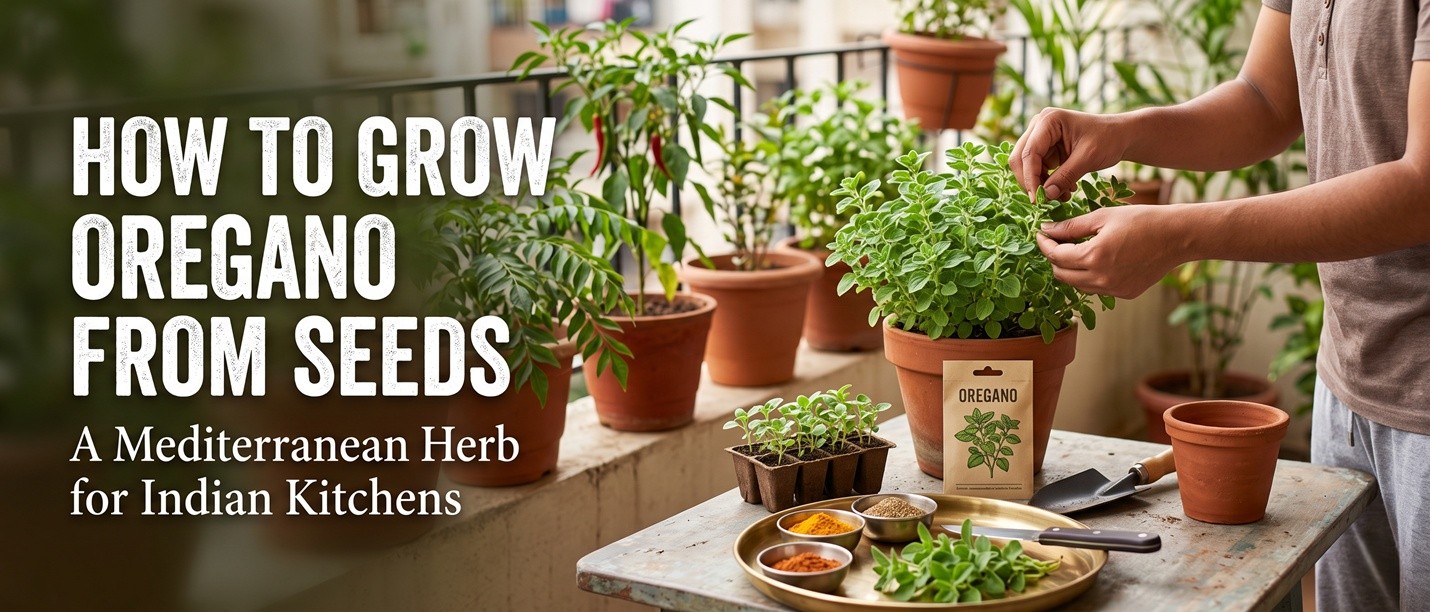
What Makes Oregano Different from Other Kitchen Herbs
Oregano (Origanum vulgare) is a woody perennial herb native to the Mediterranean, where it grows wild on dry, rocky hillsides. Unlike soft, fast-growing annuals like basil or cilantro, oregano develops a woody root crown and tough, fibrous stems that persist year after year. The flavor comes from essential oils (carvacrol and thymol) that the plant produces in response to stress — specifically, full sun, dry soil, and poor, well-drained substrate. This means that the worst thing you can do for oregano flavor is to pamper it.
The other distinctive trait is germination. Oregano seeds are tiny (about 10,000 per gram), slow to germinate (10 to 21 days), and have naturally low germination rates (often 50 to 60 percent even under ideal conditions). The seeds contain germination inhibitors in their coat that in nature would be washed off by winter rains. Mimicking this — by soaking the seeds overnight or cold-stratifying them in the fridge for a week — can raise germination to 75 percent or higher. Most home growers give up on oregano seeds because they expect basil-speed results and abandon the tray after two weeks.
💡 Tip
If you have access to a friend's established oregano plant, take cuttings or divide the root crown instead of growing from seed. Oregano is one of the easiest herbs to propagate vegetatively, and you will have a harvestable plant in 6 to 8 weeks instead of 4 to 5 months. Seed-growing is rewarding but slow; vegetative propagation is fast and reliable.
Stratifying and Sowing the Seeds
Two weeks before you plan to sow, place the oregano seed packet in the refrigerator (not freezer). This cold stratification mimics a Mediterranean winter and breaks dormancy hormones in the seed. After 7 to 14 days, soak the seeds in room-temperature water for 4 to 6 hours just before sowing. Drain and sow immediately — the seeds will be slightly swollen and easier to handle. This combined treatment typically doubles germination compared to sowing dry seeds straight from the packet.
Fill a seedling tray with a sterile, fast-draining mix (two parts coco coir, one part perlite, one part vermiculite, a pinch of compost). Do not use regular potting soil — it stays too wet for oregano seeds, which rot easily. Press the seeds onto the surface and barely cover with a thin dusting of vermiculite — oregano seeds need some light to germinate. Mist gently, cover the tray with a clear plastic dome or plastic wrap to maintain humidity, and place in a warm spot (20 to 25 degrees Celsius) with bright indirect light. Germination in 10 to 21 days.
⚠️ Warning
Do not bury oregano seeds more than 2 millimeters deep. Anything deeper and the tiny seedlings will not have the energy to push through to the surface. If you cannot see seeds through the vermiculite layer, you have buried them too deep — gently brush off the excess with a dry finger.
Transplanting into Final Containers
Once seedlings have 4 to 6 true leaves (about 6 to 8 weeks after sowing), they are ready for transplanting. Oregano's worst enemy is wet feet, so the final container must drain rapidly. A terracotta pot 20 centimeters or larger with a generous drainage hole is ideal — the terracotta wicks moisture through its walls and the porous walls allow oxygen exchange, both of which the roots love. Use a mix of one part good garden soil, one part compost, one part coarse sand or perlite, and one part gravel or pumice. The mix should feel gritty and drain in seconds when watered.
Plant one seedling per pot, or three per 30-centimeter window box. Water well once after transplanting, then withhold water until the top 5 centimeters of soil are bone dry. Oregano roots that stay wet for more than 24 hours begin to rot. In humid Indian climates during monsoon, oregano may need overhead cover (a small clear polytunnel or moving pots under an eave) to prevent fungal disease. Once established, the plant tolerates a wide range of conditions but rewards tough love with stronger flavor.
Sun, Water, and Feeding
Oregano demands full sun — at least 6 hours of direct sunlight daily. In partial shade, the plant grows leggy, produces soft weak growth, and has almost no flavor. The essential oils that give oregano its pungency are produced in response to UV light and water stress; shaded, overwatered oregano tastes like bland cardboard. If your only growing spot gets less than 4 hours of sun, supplement with a full-spectrum LED grow light for 12 hours a day.
Water deeply but infrequently. Allow the soil to dry completely between waterings — the leaves will start to look slightly dull and feel softer than usual when the plant is genuinely thirsty. In summer in hot Indian climates, this may mean watering every 3 to 4 days; in winter, every 7 to 10 days. Do not fertilize oregano — high-nitrogen feeds produce lush, fast, flavorless growth. A single top-dressing of compost in spring is all the plant needs for the year. The poorer the soil, the stronger the flavor.
💡 Tip
If you grow oregano in a container, water from the bottom (set the pot in a saucer of water for 30 minutes, then drain) rather than from the top. Bottom watering keeps the leaves dry, which prevents the fungal diseases that oregano is prone to in humid weather. It also encourages deep root growth, which makes the plant more drought-tolerant.
Pinching and Pruning for Bushy Growth
Left to its own devices, oregano grows tall and leggy, with sparse leaves along woody stems. To produce a dense, bushy plant, pinch off the growing tip of each stem once it has 6 to 8 leaves. This forces the plant to branch at that node, doubling the number of growing tips. Repeat every 2 to 3 weeks during the first growing season. By mid-summer, you will have a rounded, dense plant covered in harvestable leaves rather than a few long bare stems.
Once the plant is established (3 to 4 months old), give it a hard pruning twice a year — once in early spring and once in late summer. Cut all stems back by half, leaving 5 to 8 centimeters of growth above the soil. This rejuvenates the plant, removes woody old growth, and produces a fresh flush of tender flavorful leaves. The prunings can be dried or used fresh. After 3 to 4 years, the plant becomes woody and unproductive — replace by dividing the root crown or starting fresh seedlings.
Harvesting and Drying for Maximum Flavor
Oregano flavor peaks just before the plant flowers, when essential oil content is highest. Harvest in the morning after dew has dried but before the heat of the day, by cutting stems 5 to 8 centimeters above the soil. Never harvest more than one-third of the plant at a time — taking more weakens the plant and slows regrowth. The plant will produce 3 to 4 harvests in a single growing season if you keep cutting.
Fresh oregano has a bright, almost citrusy flavor; dried oregano has a deeper, more pungent flavor because the drying process concentrates the essential oils. To dry, tie stems in small bundles and hang them upside down in a warm, dry, dark, well-ventilated spot. Direct sunlight destroys the oils and color. Once completely dry (3 to 7 days), strip the leaves from the stems and store in an airtight jar in a cool dark cupboard. Properly dried oregano retains good flavor for 12 to 18 months. For best flavor, crush the dried leaves between your fingers just before using — this releases the volatile oils that pre-crushed commercial oregano has lost.



Only logged-in users can comment
Sign in or create a free account to join the conversation — it takes less than a minute.