

Why Fast Crops Are the Best Entry Point
Many new gardeners give up after their first attempt because they planted tomatoes or peppers and waited 100+ days for a harvest that may or may not materialize. Fast crops solve this problem by giving you visible, edible results within weeks of planting. Radishes ready in 25 days, microgreens in 7, baby greens in 21 — these quick wins build confidence and skill that translate to more demanding crops later.
Fast crops are also valuable for experienced gardeners. They fill gaps between slower crops in succession planting, provide a quick harvest from a late-season empty bed, and let you take advantage of short windows of favorable weather. A packet of radish seeds costs $2 and produces 200 radishes in a single square meter over 30 days — no other crop delivers so much food so quickly.
💡 Tip
Plant one fast crop every two weeks through the growing season. You will always have something ready to harvest, and you will discover which varieties and timing work best in your specific microclimate. Keep notes — by year three you will have a personalized planting calendar tuned to your space.
Crops Ready in Under 30 Days
These are the fastest edible crops you can grow — microgreens and sprouts can be harvested within a week, and several full vegetables are ready in under a month. They are ideal for windowsill growing, late spring plantings when you missed the early window, and children's gardens where patience is in short supply.
Edible crops ready in 7–30 days:
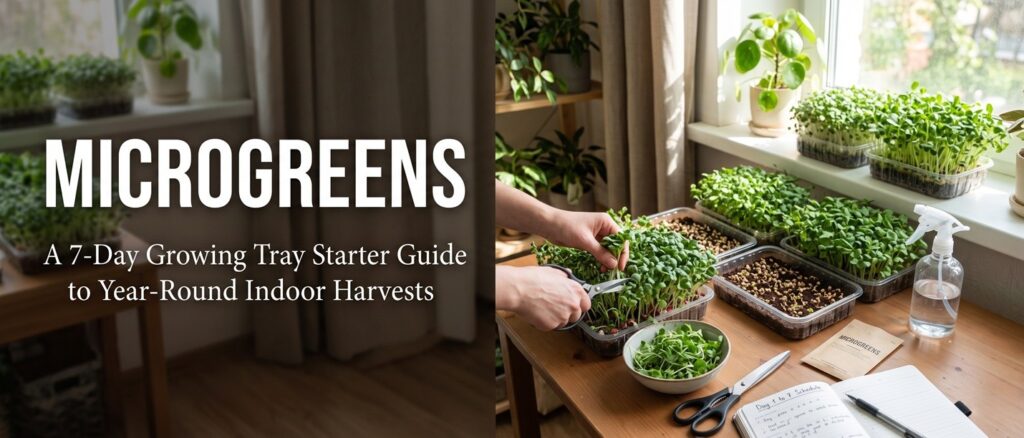
- Microgreens (7–14 days) — broccoli, radish, mustard, sunflower, pea shoots grown in shallow trays, harvested with scissors when first true leaves appear
- Sprouts (3–7 days) — mung beans, alfalfa, clover, broccoli grown in jars with mesh lids, rinsed twice daily, eaten whole including seed
- Radishes (25–30 days) — 'French Breakfast', 'Cherry Belle', 'Easter Egg' varieties; sow directly in the garden every 2 weeks for continuous harvest
- Bok choy / baby bok choy (30 days) — harvest as baby greens at 20 days or full size at 45 days; excellent in stir-fries
- Arugula (21–30 days) — peppery salad green, harvest outer leaves or cut the whole plant; resprouts for a second harvest
Crops Ready in 30–45 Days
These crops take a bit longer but still deliver harvests within 6 weeks. Most are leafy greens that can be harvested continuously as 'cut-and-come-again' — pick the outer leaves and the plant keeps producing new ones from the center. A single sowing of cut-and-come-again lettuce can provide 4–6 harvests over 4–6 weeks.
Edible crops ready in 30–45 days:
- Lettuce (35–45 days) — leaf lettuce is fastest; butterhead and romaine take 50+ days; harvest outer leaves or whole plant
- Spinach (35–45 days) — cool-season crop, sow in early spring or autumn; harvest outer leaves or cut whole
- Mustard greens (30–40 days) — spicy leaves, many Asian varieties; harvest baby leaves for salads or mature for cooking
- Mizuna and mibuna (35 days) — Japanese mustard greens, mild peppery flavor, very cold-tolerant for autumn and winter harvests
- Tatsoi (40 days) — beautiful rosette of dark green spoon-shaped leaves, very cold-tolerant
- Bush beans (45–55 days) — 'Provider', 'Contender', 'Tendergreen' varieties; harvest when pods are 10–15 cm long
- Turnips (40 days for greens, 60 days for roots) — 'Tokyo Cross', 'Hakurei' varieties; both greens and roots are edible
- Green onions / scallions (40–60 days) — sow thickly and harvest as needed, or regrow from grocery store roots
Crops Ready in 45–60 Days
These crops bridge the gap to longer-season vegetables. Bush beans and zucchini in particular are garden workhorses — once they start producing, they deliver a harvest every 2–3 days for weeks. Plant these alongside your slower tomatoes and peppers for an early-season food source while you wait.
Edible crops ready in 45–60 days:
- Zucchini and summer squash (50 days) — harvest when 15–20 cm long; check daily once production starts, as fruits become unmanageably large overnight
- Cucumbers (50–60 days) — bush varieties for small spaces, vining varieties for trellises; harvest when 10–15 cm long for best flavor
- Beets (50–60 days) — 'Detroit Dark Red', 'Chioggia', 'Golden' varieties; both roots and greens are edible
- Kohlrabi (50–60 days) — unusual swollen stem, mild turnip-like flavor, harvest when 5–7 cm diameter
- Baby carrots (50–60 days) — 'Paris Market', 'Thumbelina' round varieties; full-size carrots take 70+ days
- Pea shoots (50 days for shoots, 60+ for pods) — harvest tender growing tips for stir-fries, or wait for snow peas
Succession Planting for Continuous Harvest
The secret to a productive fast-crop garden is succession planting — sowing small amounts every 1–2 weeks rather than one big planting. This avoids the 'feast or famine' problem where you have 50 radishes ready on the same day and none the rest of the month. Aim to plant what you will actually eat in a 1–2 week window, then plant the same amount again the next week.
In a 1 x 2 meter raised bed, a typical succession might be: 1 row of radishes (25 days), 1 row of lettuce (45 days), 1 row of bush beans (50 days), and 1 row of arugula (30 days), with each row replanted as soon as it is harvested. This gives you a continuous supply of 4 different vegetables from a small space, with new plantings every 1–2 weeks through the growing season.
⚠️ Warning
Cool-season crops (lettuce, spinach, radishes, arugula, bok choy) will bolt (flower and turn bitter) once days get long and temperatures exceed 25°C. Plant these in early spring and late summer for autumn harvest. Replace them with warm-season crops (bush beans, zucchini, cucumbers) through the height of summer.
Container Growing for Fast Crops
All of these fast crops grow well in containers, making them suitable for balconies, patios, and even sunny windowsills. Use a container at least 15 cm deep for leafy greens, 20+ cm for root crops, and 25+ cm for bush beans and zucchini. A 30 cm diameter pot can hold 8–10 lettuce plants, 12 radishes, or 3 bush bean plants — a meaningful harvest from a tiny space.
Container-grown vegetables need more frequent watering than garden-grown ones, because the limited soil volume dries out quickly. Water daily in hot weather, and feed every 2 weeks with a balanced liquid fertilizer diluted to half strength. The fast growth rate of these crops means they need consistent nutrients — without regular feeding, leaves become pale and growth slows.
💡 Tip
Save your own seeds from fast crops like radishes, lettuce, and bush beans. Allow the best 2–3 plants of each variety to flower and set seed, mark them clearly, and harvest the seeds when fully dry. After one season you will have more seeds than you can plant in a lifetime — and they will be perfectly adapted to your growing conditions.


Only logged-in users can comment
Sign in or create a free account to join the conversation — it takes less than a minute.